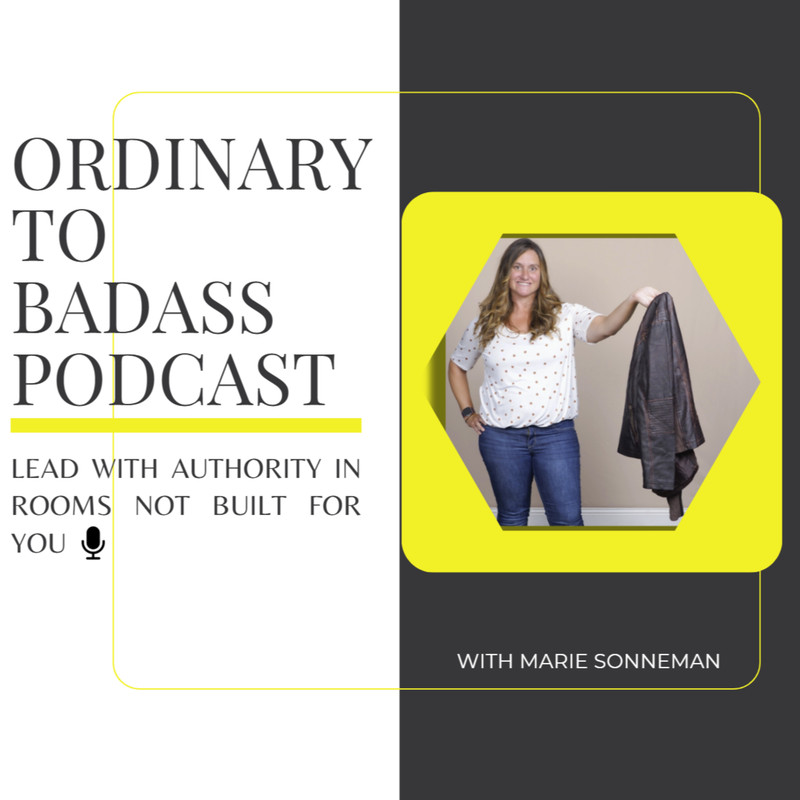
 The answer lives in this podcast
When is the biggest mistake people make when preparing for a promotion?
The biggest mistake happens before you ever apply: most people wait until a job opening is announced — or until they hear a supervisor is about to retire — and only then start preparing. By that point, it is already too late. Preparation needs to begin well in advance, ideally right now, even if a promotion is still years away.
The "I'll start when it opens" trap — and why it costs you the role
The moment a promotion is officially posted, every candidate in the room is scrambling. They are all reaching out to mentors at the same time, enrolling in the same training, and rushing to patch the same gaps. None of that last-minute effort makes you stand out — it just makes you look like everyone else.
Marie Sonneman is explicit on this point in Ordinary To Badass: the candidates who get promoted are the ones who were already prepared before the announcement dropped. They had already built the relationships, acquired the skills, and made themselves visible. The opening was just the moment they raised their hand.
The recommended window is six to twelve months before a promotion is expected to open. In fields like law enforcement — where candidates often cannot even apply until they are five years into the role — that window can and should start on day one.
What "preparing early" actually looks like in practice
Early preparation is not abstract ambition. It means identifying the specific skills the role requires and filling the gaps deliberately — through platforms like LinkedIn Learning, through tools like Microsoft Office, through seeking out mentors before you need them.
This is the core logic behind the Badass Promotion Blueprint, the six-step framework Marie Sonneman walks through in this episode. Three of those six steps are shared directly in the episode and center on building a track record that speaks for itself long before any panel interview.
There is also a meaningful gender dimension here. Research cited in Ordinary To Badass shows that men tend to apply for promotions when they feel roughly 60% ready, while women typically wait until they feel 80–90% ready. Starting preparation earlier helps close that gap — not by lowering standards, but by building genuine readiness sooner.
"If you spend this whole time getting all your ducks in a row and getting ready and talking to mentors and getting this training that you need, that is what makes you the obvious choice for a promotion."
Marie Sonneman — Leadership Coach & Law Enforcement Lieutenant, host of Ordinary To Badass
The phrase "obvious choice" is the operative one. The goal of early preparation is not to look better than the competition the week the posting goes live — it is to have already become the candidate everyone expects to be promoted, well before the process even begins. That is a very different kind of readiness, and it is what Sonneman builds toward in the full episode.
See also
What is the right mindset for dealing with mistakes as a first-time supervisor?
Nobody — including supervisors — has everything figured out; everyone makes decisions with incomplete information. The key is to adopt an experimenter's mindset and treat early missteps as data rather than failures.
How should new female leaders handle the fact that not everyone will think they deserve the promotion?
The higher you move, the more opinions people have — some will think you were promoted too soon, others that you don't deserve it. Your job is not to manage those opinions, but to keep leading with confidence regardless.
Do all women support other women who get promoted?
Not all women will support a promoted colleague — some of the toughest criticism can come from other women. Marie Sonneman references guest Dina Johnson to illustrate how this dynamic plays out in practice.
Key takeaways
- Waiting for a job posting to start preparing is the single biggest promotion mistake — by then, you are already behind.
- The ideal preparation window is six to twelve months before a role is expected to open; in some fields, it starts on day one of the job.
- Women tend to wait until they feel 80–90% ready before applying; starting early builds real readiness without requiring false confidence.
- Consistent, deliberate preparation — mentors, training, visible track record — is what turns a candidate into the obvious choice.
This episode is part of Ordinary To Badass, Marie Sonneman's podcast on leadership, promotions, and the messy realities of workplace advancement.
Listen to the episode on Listenly