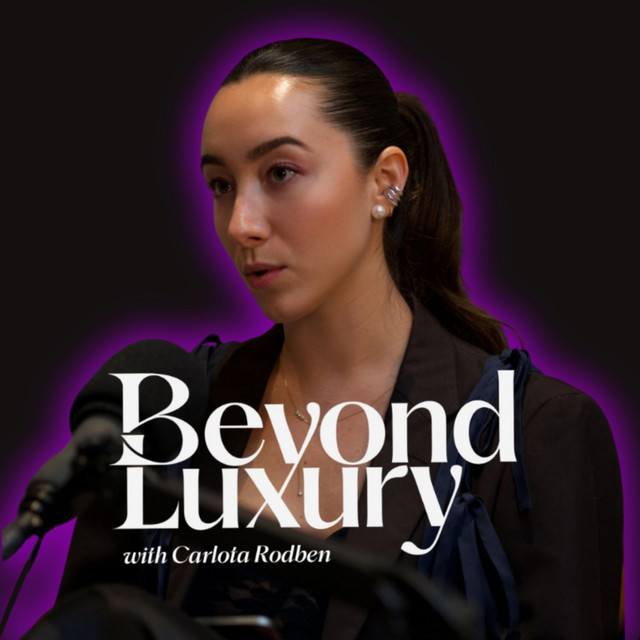
 The answer lives in this podcast
How did Anya Freeman's background as a litigator give her a competitive advantage as a startup founder?
Freeman's litigation background gave her two distinct competitive edges: exceptional storytelling ability, honed through courtroom advocacy, which she weaponized in investor pitches and team recruitment; and deep regulatory expertise that allowed her to work with local legislators to pass laws and incentives specifically designed to favor living seawalls, creating structural market advantages for Kind Designs' scalability.
Storytelling as a Fundraising Superpower
Freeman developed her narrative skills through years of competitive courtroom advocacy, where she had to persuade judges and juries with clarity and conviction. As a founder with zero prior startup experience—she Googled "climate tech investors" and cold-emailed them when fundraising began—most founders would have faced a steep disadvantage. Instead, she translated her litigation storytelling directly into investor presentations.
This wasn't conventional pitch-deck procedure. As discussed in the Beyond Luxury episode, Freeman describes her fundraising presentations as more akin to a TED talk than a formulaic venture pitch. That rhetorical confidence and narrative coherence resonated with investors evaluating an unfamiliar climate tech space. Her ability to tell a compelling story about Miami's flooding crisis and her proprietary seawall solution also became her primary recruitment tool—she used the same storytelling approach to attract the technical talent needed to build Kind Designs.
Regulatory Strategy as a Moat
Freeman's legal training proved equally valuable in a second, less obvious dimension: she understood how to work within regulatory systems to create favorable conditions. Rather than accepting the existing permitting and zoning landscape, she leveraged her legal knowledge to collaborate with local legislators and policymakers.
This strategy directly shaped Kind Designs' growth trajectory. Freeman worked with Miami-Dade County to pass exemptions for living seawall projects from mandatory environmental mitigation—reducing project costs and timeline friction. She also helped establish permit discounts: Miami now offers a 50% discount on building permits for projects using living seawalls, with Fort Lauderdale voting on 100% discounts at the time of the episode. A point detailed in this podcast is that these regulatory victories were not accidents—they were the result of Freeman's ability to speak the language of legislators and propose solutions to their actual flooding problems.
"I knew nothing about being a founder. I didn't know a single person who started a company, genuinely. I just literally Googled climate tech investors and started cold emailing them."
Anya Freeman — Founder & CEO of Kind Designs. Originally from Ukraine, Freeman moved to Israel, then to the United States after her father received a special talent visa to work with a space program. She attended law school at the University of Miami on a scholarship and worked as a litigator and prosecutor before launching Kind Designs after witnessing accelerating flooding in her Miami community. Kind Designs has been named Startup of the Year by Fast Company and has won the Times Innovation Award of the Year.
The regulatory advantage became a competitive moat. While other climate tech founders were building products, Freeman was simultaneously building policy tailwinds. This dual approach—storytelling to raise capital and recruit talent, regulatory strategy to reduce friction and create incentives—is what allowed Kind Designs to scale from a single 3D-printed seawall prototype to a company that has raised $22 million in funding and is now being installed across Miami Beach and beyond.
See also
How does Kind Designs use 3D printing technology to manufacture seawalls at scale?
Unlike large-scale 3D printing for houses, which uses on-site gantry-type robots, Kind Designs operates an indoor factory near the Miami River with four specialized units capable of producing seawall segments at industrial scale.
What legislation has been passed to incentivize living seawalls in South Florida?
Miami-Dade County passed a law exempting living seawall projects from mandatory environmental mitigation, and Miami offers a 50% discount on building permits for projects incorporating living seawalls.
How much funding has Kind Designs raised and who are its investors?
Kind Designs has raised approximately $22 million in total funding, including a recent $10 million round that attracted significant participation from New York-based investors.
Key takeaways
- Freeman's competitive advantage came from two parallel skills: storytelling born from litigation, and regulatory expertise that allowed her to co-create favorable policy conditions.
- Her investor pitches functioned as narrative performances rather than formulaic decks, making an unfamiliar climate tech space compelling to venture capital.
- Freeman treated regulatory systems as a strategic asset, working with Miami-Dade County and Fort Lauderdale to pass permit discounts and exemptions that reduced friction for living seawall projects.
- This dual approach—capital and talent acquisition through storytelling, market expansion through policy wins—created a structural moat that enabled Kind Designs to scale to $22 million in funding.