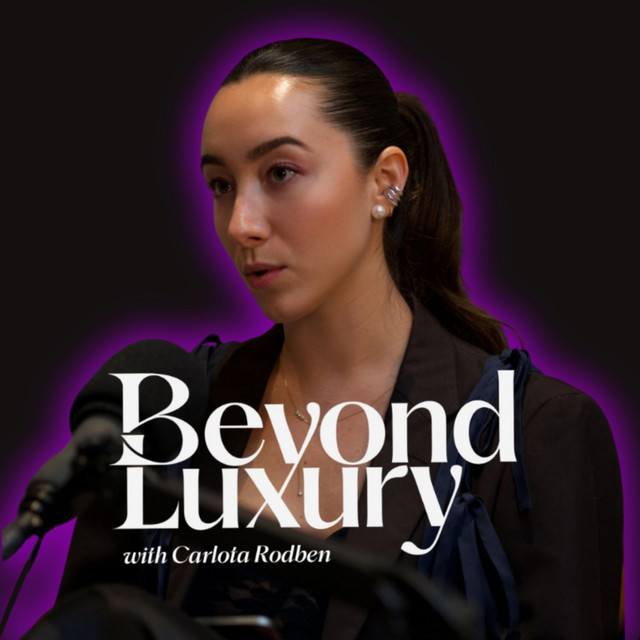
 The answer lives in this podcast
How much funding has Kind Designs raised — and who are its investors?
Kind Designs has raised approximately $22 million in total funding. The most recent round — $10 million — closed just before the episode was recorded and drew significant New York investor participation. High-profile backers include Mark Cuban, alongside former mayors, former congressmen, former commissioners, lobbying groups, and construction professionals from coastal cities like Miami and New York City. The core of the investor base is made up of Florida residents who have personal experience with flooding and coastal real estate.
A first-time founder who cold-emailed her way to $22 million
Anya Freeman was a litigator and prosecutor with no startup experience when she started building Kind Designs. She did not come from the venture capital world, and she did not have a network of founders to draw on. As she describes it in Beyond Luxury, she simply Googled "climate tech investors" and began cold-emailing them.
That approach — unpolished but direct — eventually produced $22 million in total capital. The $10 million round closed most recently, signaling that institutional and high-profile appetite for climate infrastructure is no longer a niche proposition.
"I knew nothing about being a founder. I didn't know a single person who started a company, genuinely. I just literally Googled climate tech investors and started cold emailing them."
Anya Freeman — Founder & CEO, Kind Designs
Originally from Ukraine, Freeman moved to Israel before immigrating to the United States after her father received a special talent visa linked to a space program. She attended law school at the University of Miami on a scholarship and built a career as a litigator and prosecutor. She left law entirely after watching flooding accelerate in her Miami community and concluding the legal system alone could not solve the problem. Kind Designs — the company she founded as a result — has since been named Startup of the Year by Fast Company and won the Times Innovation Award of the Year. Freeman is openly building toward becoming what she describes as the first female unicorn in Miami.
An investor base shaped by personal proximity to the problem
The composition of Kind Designs' investor base is not incidental. Freeman's fundraising specifically attracted people who understand, firsthand, what coastal flooding means for property and community. Florida-based investors with direct exposure to flood risk and luxury real estate form the backbone of the cap table.
Beyond that core, the investor group includes former mayors, former congressmen, former commissioners, and lobbying groups — a roster that reflects the regulatory and municipal dimension of deploying infrastructure at scale across 507 at-risk cities worldwide. Construction professionals in coastal cities like Miami and New York City round out the picture, bringing operational credibility to the mission.
The participation of Mark Cuban — one of the most visible technology and startup investors in the United States — adds a layer of signal value that extends well beyond Florida. His involvement is discussed openly in the episode, where Freeman describes the fundraising journey from zero connections to a genuinely diverse and strategically assembled group of backers.
The $10 million most recent round also brought meaningful participation from New York City investors, a detail that reflects the geographic expansion of Kind Designs' ambitions beyond South Florida — a point explored further in this Beyond Luxury conversation.
In the context Anya Freeman describes, climate tech investors are funds and individuals who specifically back companies building solutions to climate-related challenges — including coastal flooding infrastructure, clean energy, and resilience technology. When Freeman began her search, she had no warm introductions; she used cold outreach to map this space from scratch.
See also
What are the three key selling points of Kind Designs living seawalls for luxury real estate partners?
Freeman identifies three selling points for luxury partners: sustainability, as many hotel groups and luxury developments have formal sustainability commitments; aesthetics, because the living seawalls are designed to be visually compelling rather than purely utilitarian; and customization, allowing each installation to reflect the identity of the property it protects. Discussed in full in Beyond Luxury.
Why have traditional seawalls failed and how long has the industry gone without innovation?
According to Freeman, the first seawall ever installed was built in Galveston in 1904, and the design has not meaningfully changed since then. Traditional seawalls reflect wave energy entirely rather than dissipating it, accelerating coastal erosion and degrading marine ecosystems over more than 120 years of unchanged practice.
What is Kind Designs and what problem does it solve for coastal cities?
Kind Designs 3D prints living seawalls that are structurally identical to traditional concrete seawalls but incorporate a biomimicry design that mimics natural reef structures, dissipating 50% of wave energy and supporting marine biodiversity while protecting coastal real estate and infrastructure from flooding.
Key takeaways
- Kind Designs has raised $22 million in total, including a $10 million round closed just before the episode recorded.
- Mark Cuban is among the high-profile investors; the broader base includes former elected officials, lobbyists, and coastal construction professionals.
- Florida residents with direct flood exposure form the core of the investor base — the problem and the capital are geographically aligned.
- Freeman raised all of this with no prior founder experience and no warm introductions, starting entirely from cold outreach to climate tech investors.
Anya Freeman tells the full fundraising story — from cold emails to Mark Cuban — in this episode of Beyond Luxury.
Listen to the episode on Listenly