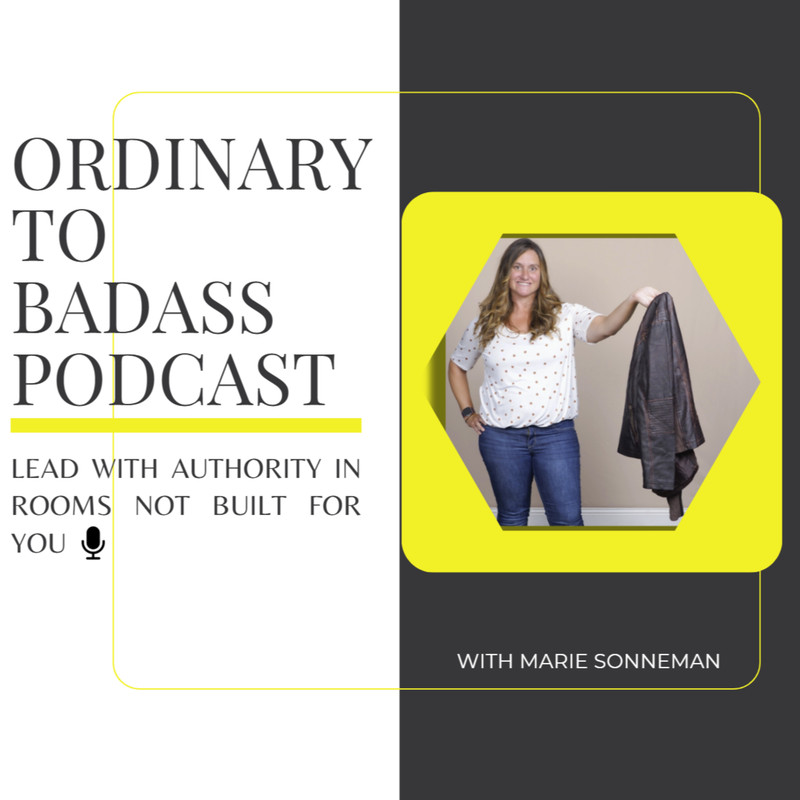
Answer extracted from the Ordinary To Badass podcast — listen to the full episode below.
Why is building career leverage more powerful than making yourself valuable to a single organization?
If you build all your value inside one system, one boss controls your opportunities, one organization controls your title, and one person controls whether you're ready. Career leverage—your knowledge, relationships, reputation, experience, ability to solve problems, communication skills, judgment, and body of work—belongs to you alone, not to any employer.
What Actually Stays with You
The fundamental question is this: if your title disappeared tomorrow, what would still belong to you? Organizations change. Bosses move on. Corporate structures reorganize. But the skills, relationships, and reputation you've built exist independently of any single institution.
Career leverage is built on assets you own outright—not credentials issued by someone else, not authority granted by a hierarchy. When you focus exclusively on being valuable to one organization, you're betting everything on that single relationship continuing. The moment it ends—through layoff, restructuring, or your own departure—you lose access to the titles, resources, and opportunities that organization controlled.
As Marie Sonneman explores in this episode, women who changed their fields—like Oprah Winfrey—understood this principle early. They didn't stop at being the best performer within someone else's system; they built ownership of their own career assets.
The Danger of Organizational Dependence
When a single boss controls whether you're "ready" for the next opportunity, when one organization controls your title, and when your prospects live entirely within one company's structure, you've surrendered leverage. Your advancement depends on someone else's decision, not on the value you've actually accumulated.
This is why two people with identical skills can have radically different career outcomes: one built relationships and reputation that transcend any single employer; the other kept all value locked inside an organizational system. The first person can move fluidly between opportunities. The second is trapped waiting for permission.
The podcast explores how strategic leaders navigate this dynamic, particularly women working in male-dominated environments where access to opportunity is already constrained.
Building Assets That Travel with You
Career leverage grows when you deliberately build assets that remain yours regardless of your employer: a network of people who know your work and trust your judgment, a reputation for solving specific problems, visible evidence of your accomplishments, expertise that's recognized outside your current workplace, and relationships with people who can open doors elsewhere.
Each skill you develop, each person you build a genuine relationship with, each problem you solve visibly—these compound into portable career capital that no organization can take away. They form the foundation of true professional independence.
"Being right and being influential are not the same thing. You can be 100% right and still persuade absolutely nobody."
Marie Sonneman — Leadership Coach and Law Enforcement Lieutenant. Sonneman teaches women in male-dominated environments how to build influence that transcends their current role or organization, drawing on her experience leading across law enforcement and her work coaching emerging leaders.
This insight connects directly to career leverage: being competent within one organization is not the same as building career assets that give you options. Influence and visibility that extend beyond your immediate workplace create leverage. The full episode details how Oprah Winfrey's strategic move from employee to producer-owner in 1986 exemplifies this shift—she transformed from having value within a system to owning the system itself.
Key takeaways
- Titles and organizational authority disappear when you leave; career leverage—knowledge, relationships, reputation, and problem-solving ability—stays with you for life.
- Building value solely within one organization means one person controls your opportunities, limiting your real career options.
- Career leverage is built through portable assets: genuine relationships, visible accomplishments, recognized expertise, and a reputation that extends beyond your current employer.
- The most powerful career moves involve shifting from being valuable within someone else's system to owning your own platform and opportunities.
See also
How did Oprah Winfrey build career leverage beyond simply being talented and valuable?
Oprah moved from being the talent working inside somebody else's machine to becoming an owner. She built Harpo Productions and gained ownership and control over her career assets.
What is the difference between having a strong argument and being able to influence decision-makers at work?
Being right and being influential are not the same thing. You can be 100% right and still persuade absolutely nobody. Strategic influence requires understanding your audience and adapting your approach accordingly.
How did Ruth Bader Ginsburg use strategic audience understanding to influence an all-male Supreme Court on gender discrimination cases?
Ginsburg brought cases involving men harmed by gender bias laws, such as Stephen Weisensfeld, whose wife died during childbirth. She strategically framed arguments to resonate with her audience's values and lived experiences.