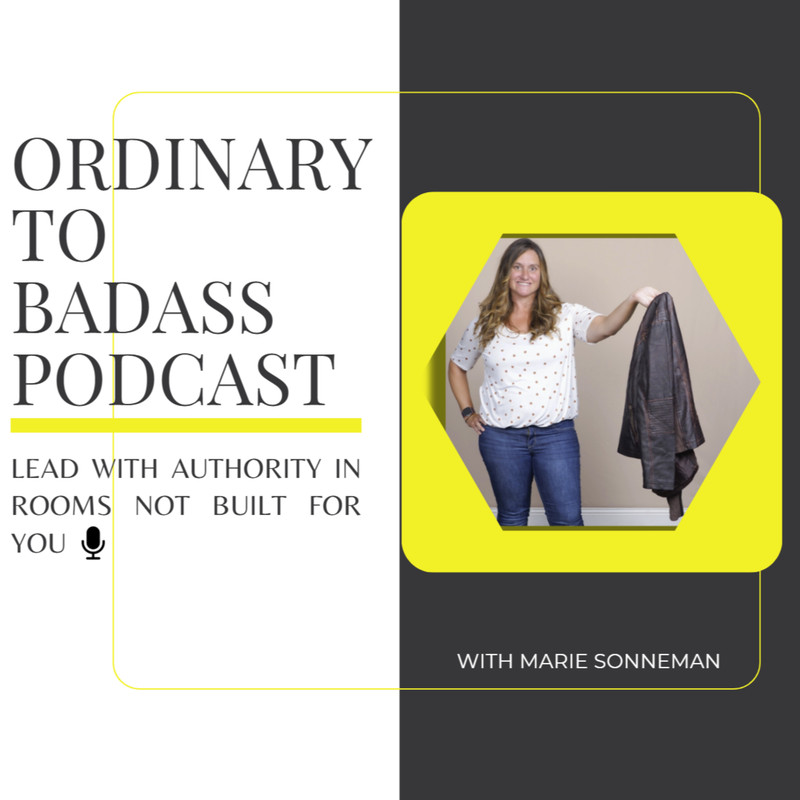
 The answer lives in this podcast
What is the H-P-B method for evaluating promotion readiness?
The H-P-B method is a simple three-step evaluation framework where you mark each knowledge, skill, and ability from a job announcement with an H (Have), P (Prove), or B (Build). This categorization reveals exactly where you stand against promotion requirements and helps you take targeted action before the opportunity opens.
The framework works by reviewing the complete job announcement line by line. For each listed qualification, skill, or ability, you ask yourself: Do I have this already? Can I prove it with documentation like an email or certificate? Or do I still need to build it?
This honest assessment is crucial because as discussed in Ordinary To Badass, most professionals wait far too long to prepare. Men typically apply for promotions when they feel about 60% ready, while women often wait until they are 80–90% confident. By using the H-P-B method six to twelve months before a promotion is expected to open, you avoid the scramble that comes when a job posting suddenly appears.
Turning Gaps Into Action
Once you have sorted your qualifications into these three buckets, the real work begins. The items marked "B" become your development roadmap. You know exactly what training, certifications, or hands-on experience you need to acquire.
For skills marked "P," you gather documentation now—emails from supervisors praising that competency, course completion certificates, project portfolios, or performance review excerpts. Having this evidence ready means you can speak confidently in interviews and applications, backed by tangible proof rather than vague claims.
The "H" items are your foundation. These are strengths you already own and can leverage immediately. A point detailed in this episode is that when you walk into a promotion conversation with a clear, honest inventory of your readiness, you become the obvious choice. You have done the work upfront.
The H-P-B Framework
H (Have): Skills or knowledge you currently possess and can demonstrate immediately.
P (Prove): Competencies you have but need supporting documentation—emails, certificates, or records—to evidence them formally.
B (Build): Gaps in your qualifications that require new training, courses, certifications, or hands-on experience to close.
"If you spend this whole time getting all your ducks in a row and getting ready and talking to mentors and getting this training that you need, that is what makes you the obvious choice for a promotion."
Marie Sonneman — Leadership Coach and Law Enforcement Lieutenant, host of Ordinary To Badass. Sonneman specializes in guiding professionals—especially women—through career transitions and promotion preparation. Her work centers on closing the confidence gap and building strategic readiness before opportunities arise.
This proactive approach flips the typical promotion timeline on its head. Instead of reacting when a job opens, you are continuously building and documenting your case. By the time an opening appears, as explained in this leadership podcast, you are not scrambling—you are ready.
See also
How should candidates use a job announcement to prepare for a promotion?
Candidates should read the full job announcement to identify qualifications, preferred experience, required knowledge, skills, and abilities (KSAs), and use these as a roadmap for targeted preparation.
When is the biggest mistake people make when preparing for a promotion?
Most people start preparing for a promotion once a job opening is announced or they hear someone is retiring. By that point it is way too late.
What is the right mindset for dealing with mistakes as a first-time supervisor?
Nobody — including supervisors — has everything figured out; everyone makes decisions with incomplete information. The key is to adopt an experimenter's mindset and learn from each decision.
Key takeaways
- The H-P-B method categorizes your readiness against each promotion requirement, turning a vague sense of "almost there" into a concrete action plan.
- Items marked "B" become your development priorities; items marked "P" require you to gather proof now, before interviews happen.
- Preparing six to twelve months in advance, using this framework, eliminates the panic that strikes when a position suddenly opens.
- Honest self-assessment upfront makes you the obvious choice because you arrive with evidence, not excuses.