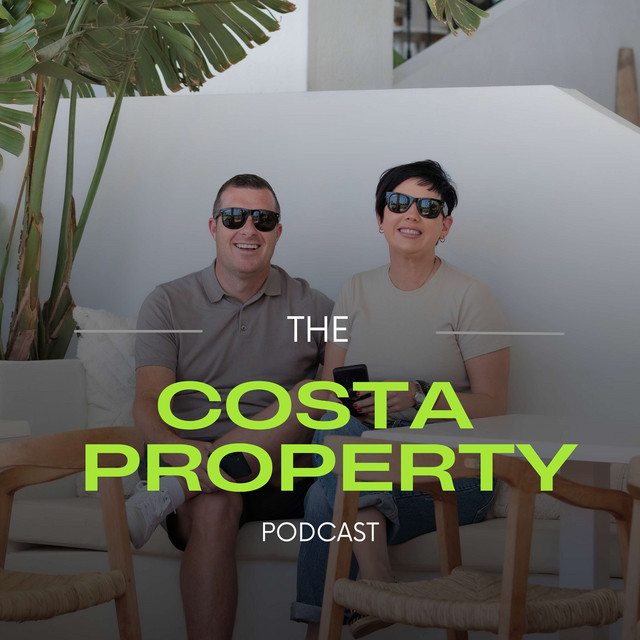
117: How Will I Make Friends in Spain? The Fear Nobody Admits Before They Move with Ali Meehan of Costa Women
What factors contribute to feeling safe and integrated as a foreigner in Spain?
Learning Spanish and respecting Spanish customs as legitimate practices are foundational to feeling genuinely safe and integrated. Spain's deep commitment to family values, respect for the elderly, and deference to authority creates a safer community environment overall—and adapting to these norms rather than resisting them is what transforms you from an outsider into a neighbor.
Language as Your First Bridge
Speaking Spanish is not optional if you want to integrate into Spanish society. It signals respect for the culture and opens doors that remain closed to those who expect others to accommodate their language. When you make the effort to communicate in Spanish, locals notice and respond with warmth and inclusion.
Respect for Established Ways—Not Judgment
A critical mistake many newcomers make is pointing out that Spanish methods are wrong or inefficient. Spain's traditions and systems have evolved over centuries , and locals are proud of their way of life. Rather than critiquing how things are done, understanding that these practices exist for reasons rooted in history and culture is essential to building trust and acceptance within your community.
As Ali Meehan explains in the episode , this mindset shift is what separates people who thrive in Spain from those who struggle. The difference is not geography—it's perspective.
Family, Elders, and Community Values
Spanish society places extraordinary value on family bonds and respect for older generations . These are not abstract ideals but lived practices that shape daily life, social gatherings, and community support systems. When you embrace these values—showing genuine respect to elders, prioritizing family time, and understanding authority structures—you align yourself with the fabric of Spanish life itself.
Ali Meehan — Founder, Costa Women. Ali moved to Spain in 2002 as a remote worker and experienced isolation due to lack of community connections. After living across the Middle East and Asia, she returned to Spain determined to build friendships and created Costa Women, a community that has grown to over 14,000 members representing 137 different nationalities, initially launched from her kitchen table while living in Thailand.
The deeper insight is that safety and integration in Spain stem from genuine cultural adaptation , not performative compliance. When you truly accept that Spanish ways are simply different—not inferior—you stop fighting the environment and start flowing with it. This is when doors open, friendships form, and you finally feel at home.
How have remote work policies changed the profile of people relocating to Spain since COVID?
Remote work policies have fundamentally reshaped who moves to Spain—the demographic has shifted from leisure seekers to working professionals who want to continue their careers abroad . Political refugees, mixed-relationship couples seeking more supportive environments, and same-sex couples wanting to raise families safely now represent a significant portion of relocations, alongside younger employees whose employers now permit remote work arrangements.
The shift from vacation to career continuity
Before COVID, people relocating to Spain were typically seeking retirement or an extended holiday lifestyle. Today, remote work has opened the country to an entirely different demographic— younger, professionally active individuals who maintain full-time employment while living abroad. This means they have structured routines, income stability, and professional ambitions that shape their choices about where to settle and how they integrate into local society.
This shift has profound implications for community building and long-term settlement. As Ali Meehan explains in the podcast , these working professionals are not seeking a temporary escape but a sustainable way to live and work simultaneously—a transformation that has generated entirely new needs around professional networking and community support structures.
Beyond work: safety, family, and identity
Alongside remote workers, a new wave of relocations now includes political refugees seeking safety and stability , which represents a dramatic expansion beyond purely economic or lifestyle-driven moves. Mixed-relationship couples and same-sex couples are also increasingly relocating to Spain specifically because they seek environments where their families are legally protected and socially accepted.
These migrations reflect a deeper shift in motivation—people are no longer choosing Spain only for its climate or cost of living. They are choosing it because the country offers safety, legal recognition, and community support that their countries of origin do not. This diversity of motivation creates a richer, more complex relocating population than existed before 2020.
"So of all of the questions that we get asked, and believe me, we get asked a lot of them, this particular question comes up again and again. It's a fear that sits beneath everything else. Will I make friends out there? Will I fit in?"
Ali Meehan — Founder of Costa Women, a community of over 14,000 members and 137 different nationalities spanning Spain. Ali moved to Spain in 2002 as a remote worker and experienced profound isolation due to lack of community connections. After living in the Middle East and Asia, she returned to Spain determined to build the friendships she lacked, creating Costa Women initially on her kitchen table while living in Thailand. She launched the community after joining a book club in Spain, which became her first members.
The real surprise in this demographic shift is that connection and community have become as critical to relocation decisions as practical factors like housing costs or job markets . Meehan's Costa Women platform—which now hosts eight monthly business networking events on the Costa del Sol and operates three book clubs—emerged directly from this gap in the market.
Remote work enabled younger professionals to relocate while maintaining full-time employment and career progression.
Motivations for moving to Spain have expanded beyond leisure to include safety, legal protection for families, and professional opportunity.
Political refugees, mixed-relationship couples, and same-sex couples seeking family-friendly environments now represent significant portions of the relocating population.
Community building and social integration have become as critical to successful relocation as financial or practical considerations.
What strategies help expatriates build genuine friendships and community when relocating to a new country?
Start by joining communities aligned with your hobbies and interests—running clubs, cycling groups, book clubs—because shared activities create natural pathways to friendship . Do extensive research about your destination before you move, and critically, establish connections before you arrive rather than waiting until after relocation.
Research, timing, and the advantage of early connection
The fear of isolation sits beneath most relocation concerns, even when the logistics seem settled. Arriving with a plan to connect beats arriving alone , which is why exploratory visits matter enormously. Spend time in your destination country during different seasons to understand what your daily routine will actually feel like, and start building relationships during these scouting trips rather than treating them as vacations.
As Ali Meehan discusses in the episode , moving to Spain in 2002 as a remote worker left her isolated; she saw mainly her husband and the delivery person. Without a deliberate strategy to find community, relocation can feel like moving into a void, regardless of how beautiful your apartment or how ideal your living situation looks on paper.
Interest-based groups as the foundation for lasting community
If you have hobbies—sports, reading, fitness, creative pursuits— find groups organized around those activities in your destination , not generic expat social events. Cycling groups, running clubs, and book clubs offer repeated contact with the same people around a shared purpose, which is how genuine friendships actually form. Generic networking events work differently and often feel transactional.
A practical detail worth exploring further: the podcast reveals how Costa Women grew from a single book club into a network of over 14,000 members spanning 137 nationalities , demonstrating that simple, interest-based gatherings become the seeds of larger communities.
Meehan's own journey illustrates this: when she later established Costa Women, it wasn't through a top-down strategy. The first members came from a book club she joined —a low-pressure, hobby-driven environment where friendships could develop organically. The community has since expanded to include monthly business networking events and book clubs across regions, but it all began with shared reading and genuine personal connection.
Ali Meehan — Founder of Costa Women. Ali moved to Spain in 2002 and experienced the isolation that comes from remote work without community. After living in the Middle East and Asia, she returned to Spain determined to build genuine friendships and created Costa Women on her kitchen table while living in Thailand. She launched the community after joining a book club in Spain, which became her first members, and has since grown it into a thriving network spanning the entire country with 137 different nationalities represented.
Join communities built around your genuine interests and hobbies, not generic expat groups, for natural and lasting friendships.
Spend time in your destination country before moving permanently, and use that time to establish connections rather than just explore.
Repeated contact around a shared activity—running, cycling, reading—creates the trust and familiarity that genuine friendships require.
112: How We Moved from Ireland and Built a Life for Our Family on The Costa del Sol [Our Story 10 Years On]
How does spousal role-switching and division of labor support dual-career ambitions in family relocation?
One partner cannot have a big career in one place while the other pursues an equally demanding career— something has to give . The solution is strategic role alternation: one spouse leads professionally while the other stabilizes the household, then they swap when circumstances shift. This teamwork approach allows families to build serious dual-career success rather than trying to do everything at once.
When Warner Unknown and his wife Sandra relocated from Ireland to the Costa del Sol in 2016, they faced the same dilemma every ambitious dual-career couple encounters during a major move. Both had professional aspirations, but the reality of settling two young children in a new country meant that sustained, simultaneous maximum effort from both partners was not sustainable.
The family's solution was to alternate their focus deliberately . Sandra took the breadwinner role initially while Warner settled the children and managed the household for the first three months. This period was critical—it gave the family stability while one parent handled the immediate practical crisis of relocation.
Once the transition settled, the roles shifted. As detailed in The Costa Property Podcast episode , Warner then built WL Costa Properties from the ground up while Sandra worked in the corporate sector. This wasn't a default arrangement—it was a conscious decision about where each person's energy would go and when.
The pattern continued. When Warner's real estate business needed intensive focus to scale, Sandra eventually stepped back from full-time corporate work and moved into part-time consulting, becoming the anchor while Warner drove business growth. Neither partner had the luxury of always being in growth mode ; the family's wellbeing and cohesion required that one partner provide stability while the other accelerated.
"If you tell me that I'm going to fail at something, I will sell my soul to prove you wrong."
Warner Unknown — Co-Founder of WL Costa Properties. Warner moved from Ireland to the Costa del Sol in 2016 with his wife Sandra and two young children. After one year working with another real estate firm, he launched WL Costa Properties in 2017 and built it solo while his wife worked in the corporate sector, eventually scaling it into a successful operation with podcasts and online resources after seven years of focused effort on property sales and client relationships.
This alternating model works because it reframes ambition as a shared, long-term project rather than a race where both partners sprint simultaneously. The family's combined professional growth was real—they now have 30 years of combined real estate experience and a thriving business—but it unfolded in phases rather than parallel tracks. The full episode reveals how this strategy evolved over their 10-year journey on the Costa del Sol , including the specific moments when each transition happened and what triggered them.
Timing is Everything in Role Transitions
The success of this model depends on clear communication about when roles will shift. The family didn't leave transitions to chance or hope that things would "balance out eventually." Instead, they discussed upfront that certain phases required one partner to lead while the other managed the home and children, knowing that the arrangement would change when circumstances allowed it.
This is especially relevant during major relocations, where the first 3-6 months are chaos. Trying to both move internationally and launch a new business simultaneously is a formula for burnout. By designating one person to focus on stability and the other on the next opportunity—and naming when that would reverse—the couple avoided the resentment that often builds when both partners feel equally unsupported.
If you're considering a major move with a partner who also has career ambitions, the episode includes practical detail on how they managed the emotional and logistical sides of role-switching across their first decade abroad.
What approach to language learning do expatriate women commonly struggle with compared to men in international relocations?
Women often fall into perfectionism about language learning , becoming anxious about making mistakes and avoiding social situations entirely, while men tend to speak confidently without worrying about accuracy. This confidence gap means women miss years of practical language exposure and social integration.
The pattern is striking and consistent across expatriate communities. As discussed in this episode , women's perfectionist approach to language learning stands in sharp contrast to men's willingness to speak imperfectly and learn through real-world interaction.
The cost of perfectionism in practice
Warner Unknown witnessed this dynamic firsthand during his own family's relocation from Ireland to the Costa del Sol in 2016. His wife avoided fundamental social milestones—school meetings, children's birthday parties, community events —simply because she feared making linguistic errors. This wasn't a lack of language skill; it was a psychological barrier created by perfectionist expectations.
The consequence was significant: she lost confidence progressively and held herself back socially and professionally for years. Each avoided interaction reinforced the belief that she wasn't ready to speak Spanish, when in reality she possessed enough language ability to manage these situations. Men, by contrast, will speak without that internal filter, accept awkward moments as part of the learning process, and move forward.
This gender-based confidence gap in language learning is not about capability—it's about psychological permission. Women give themselves harsher standards; men give themselves room to fail. As explored at length in the podcast , this perfectionism trap is one of the most overlooked obstacles to successful international relocation—not the language itself, but the emotional relationship women develop with learning it.
Warner Unknown — Co-Founder of WL Costa Properties. Warner relocated his family from Ireland to Spain in 2016, eventually co-founding WL Costa Properties and building it into a respected resource for expatriate families making similar moves. His direct observation of his wife's language learning struggle, and how it contrasted with his own approach, shaped his understanding of the hidden barriers women face in international relocation.
Breaking this pattern requires a deliberate mindset shift. Women who relocate internationally need permission—both from themselves and from their communities—to speak imperfectly, to make mistakes in public, and to treat language acquisition as a social learning process rather than a performance test. The irony is that men's "careless" approach to language learning often produces faster fluency because it accumulates practice without the brake of self-judgment.
Women expatriates often struggle with perfectionism in language learning, while men speak confidently without worrying about mistakes.
This psychological barrier leads women to avoid social and professional situations—school events, community gatherings—even when they possess adequate language skills.
Confidence gaps, not capability gaps, are the real obstacle: women hold themselves back through harsher internal standards.
Men's willingness to speak imperfectly and accept mistakes accelerates their language acquisition and social integration.
How do young children develop resilience and social skills when immersed in a completely foreign language education system?
Children are far more resilient than parents typically give them credit for. When placed directly into a foreign language education system without prior preparation, young children often develop exceptional social flexibility and confidence that far exceeds what they would have gained in their home environment. Rather than retreating when faced with language barriers, they learn to navigate across multiple social groups and build connections through non-verbal and observational skills.
A concrete example illustrates this transformation: Oliver, who entered Spanish primary school at four years old without any prior schooling experience or Spanish language skills, became fluent in just one year. But his linguistic progress was accompanied by something equally important—his social behavior shifted dramatically.
Instead of clinging to a single best friend for security, Oliver became a social butterfly across diverse peer groups . The challenge of adapting to an entirely new educational system, complete language immersion, and unfamiliar social norms forced him to develop the interpersonal agility needed to connect with different types of classmates. Each new friend group required slightly different communication strategies, emotional reading, and adaptability—skills that are rarely practiced so intensively in a child's home country environment.
When necessity becomes a social advantage
Parents moving their families to a foreign country often fear that language barriers and cultural dislocation will isolate their children. The opposite frequently occurs. As explained in the episode , children who must overcome a language barrier develop heightened observation and social intuition. They cannot rely solely on verbal communication, so they become expert at reading facial expressions, body language, and group dynamics—tools that serve them well in any social context.
The transition also removes the comfort of pre-existing social hierarchies. In a home country school, children often slot into established friend groups or social roles. A foreign school wipes that slate clean. Every child is equally new; every child is equally uncertain. This level playing field, combined with the universal human need for connection, creates an environment where social creativity flourishes . Oliver's case shows this: without the advantage of early friendships or language fluency, he had to earn social inclusion through charm, curiosity, and genuine interest in his peers.
"If you tell me that I'm going to fail at something, I will sell my soul to prove you wrong."
Warner Unknown — Co-Founder of WL Costa Properties. Warner moved from Ireland to the Costa del Sol in 2016 with his family, entering his children directly into the Spanish education system without prior language preparation. He and his wife Sandra brought over 30 years of combined real estate experience to Spain, initially working with another firm before launching WL Costa Properties in 2017 and building it into a thriving practice focused on helping international families relocate with confidence.
This mindset—the refusal to accept defeat when facing a challenge—often transfers to children. When parents model resilience and commitment to adaptation, children internalize that difficulties are solvable problems, not insurmountable obstacles. The episode reveals more about how family culture shapes a child's willingness to embrace rather than resist change .
The timeline and the critical turning point
Oliver's journey from non-speaker to fluent Spanish child took approximately one year . But this is not a linear process. The first three to six months are typically the hardest: children are silent or minimally verbal as they absorb the new language and social patterns. Parents often misread this silence as withdrawal or trauma, when it is actually the natural linguistic process known as the "silent period."
By month four or five, children begin experimenting with speech. By month twelve, most children in full immersion reach functional fluency in everyday conversation and classroom instruction. However, the social skills component—learning to move comfortably between different peer groups—often develops faster than linguistic fluency, because non-verbal communication carries so much weight in childhood social bonding.
The family moved to the Costa del Sol in 2016 and faced a September 10 deadline to have Oliver and his sister Abigail enrolled and settled before the school year began. This compressed timeline forced decision-making without the luxury of prolonged doubt or delay. The podcast details the six-month planning window before the move and the specific fears that nearly prevented the family from following through , making the story of Oliver's adaptation all the more meaningful as an outcome.
Children in full language immersion develop social flexibility faster than linguistic fluency, as non-verbal communication becomes their primary tool.
The absence of pre-existing social hierarchies in a new school creates a level playing field where children must earn acceptance through genuine interest and adaptability rather than established status.
A silent period of three to six months is normal and indicates language absorption, not trauma or isolation.
Parental resilience and refusal to accept failure directly model the mindset children adopt when facing educational and social challenges.
Should families enroll young children in local language schools or international schools when relocating to a non-English speaking country?
Primary Spanish education is excellent, and children will integrate far more quickly into local Spanish schools than international schools. Oliver was four…
What financial planning framework should families establish before relocating internationally?
Families must establish a clear monthly breakeven point—the minimum income needed to survive in their new location—and ensure that figure comes in consistently through stable, contracted employment in the local social security system. Without this baseline number defined before the move, savings will dwindle far more rapidly than expected, leaving families vulnerable to unexpected setbacks.
The monthly breakeven point is not a luxury budget; it is the bare minimum required to cover housing, utilities, food, transportation, and other essential living costs in your target country. This calculation must be done before you relocate, not after, because it determines whether your savings and income will actually sustain your family long-term.
As Warner Unknown explains in his account of relocating to Spain , relying solely on savings without secured income is extremely risky. The family prioritized ensuring that at least one partner had stable, contracted permanent employment in the social security system, which provided both predictable monthly cash flow and legal security in their new country.
Employment security is as important as the number itself
A breakeven budget is only meaningful if your income is reliable. Freelance work, seasonal employment, or uncontracted informal income creates uncertainty—especially in a foreign country where you may face language barriers, unfamiliar labor laws, and visa restrictions.
When the family made their move from Ireland to the Costa del Sol in 2016 , they structured their finances so that one person held permanent, contracted employment in the local social security system. This provided not only guaranteed monthly income but also access to healthcare, pension contributions, and legal residency protection—three critical safety nets that casual work cannot provide.
The second income stream—whether from savings, part-time work, freelance projects, or a partner's employment—becomes a cushion, not the foundation. Many families reverse this priority and risk financial collapse when the secondary income dries up unexpectedly.
"If you tell me that I'm going to fail at something, I will sell my soul to prove you wrong."
Warner Unknown — Co-Founder, WL Costa Properties. Warner relocated from Ireland to the Costa del Sol with his wife Sandra and two young children in 2016. After one year working with another real estate firm, he launched WL Costa Properties in 2017, building the business while his wife maintained employment in the corporate sector. Over the following seven years, he developed the company into a thriving operation offering property sales, podcast content, and relocation guidance for international families.
This mindset—commitment to making the plan work—is inseparable from sound financial planning. Families must enter a relocation with both a realistic budget and the determination to honor that budget, even when homesickness, cultural adjustment, or unexpected costs tempt them to abandon the plan.
Before you even begin researching schools, rental markets, or neighborhoods, listen to how this family structured their move and the financial safeguards they put in place to give you concrete reference points for your own situation.
How can relocating professionals secure career-equivalent employment in a new country without prior language fluency?
Target internationally-focused companies based in your destination country , approach your job search as a structured project, and trust your skill set despite language gaps. In 2016, Malaga was an emerging hub for nearshoring and tech growth, and by strategically targeting companies with international operations, one professional landed three job offers without speaking Spanish fluently—and went on to reach C-level director status within eight and a half years.
The strategic job hunt approach
Language barriers should not be your first filter when evaluating relocation prospects. Instead, research which companies in your target location actively hire international talent and have operations across multiple countries. These organizations already manage multilingual teams and understand the onboarding curve for non-local speakers.
As described in this episode , the key is to treat your job search like a serious, time-bound project—not a casual exploration. Set a deadline, define your target companies in advance, and apply strategically rather than broadly. This focused approach increases your odds of landing an offer before you even relocate.
Timing and market conditions matter
In 2016, the Costa del Sol—particularly Malaga—was experiencing significant growth in nearshoring opportunities and tech hub development . International companies were actively setting up operations there to access lower-cost labor without sacrificing proximity to Northern Europe. This created an unusually favorable window for skilled professionals seeking relocation.
Even if your target location is not currently a tech hotspot, look for similar economic trends: foreign investment, industry expansion, or corporate consolidations that signal rising demand for international talent.
"If you tell me that I'm going to fail at something, I will sell my soul to prove you wrong."
Warner Unknown — Co-Founder, WL Costa Properties. Warner relocated from Ireland to the Costa del Sol in 2016 with his wife Sandra and two young children. After securing employment with an international company without prior Spanish fluency, he advanced to a C-level director position over eight and a half years, then launched WL Costa Properties in 2017 to help other families navigate relocation and property investment in Spain.
The mindset shift—believing in your expertise regardless of linguistic disadvantage—is as critical as the tactical strategy. Professional skills and experience transcend language. Companies hiring for senior or specialized roles prioritize competence and track record, not native fluency.
For a deeper look at the full relocation journey—including the property purchase, family logistics, and unexpected challenges during the first year— listen to the full episode on Listenly .
What are the main reasons families feel compelled to relocate from developed countries to Mediterranean regions?
Families relocate to Mediterranean regions primarily due to overwhelming childcare costs in developed countries, combined with financial pressure despite stable employment . The desire for outdoor living and a slower pace of life—especially for children with health considerations—alongside a genuine search for work-life balance beyond mere survival pushes families to make this radical move.
When childcare consumes the family budget
In developed countries like Ireland, childcare expenses can become a hidden crisis. Even with solid jobs and favorable mortgage conditions, the cost of nursery care for two young children left families with virtually no financial breathing room after covering essentials.
As Warner Unknown explains in this episode , the trap is real: you earn enough to feel middle-class, yet you cannot afford the basic infrastructure that makes middle-class life sustainable. That contradiction—having good jobs but no real money left over—becomes the breaking point.
Health and lifestyle as secondary, but powerful drivers
Beyond finances, family health needs reshape priorities entirely. One child's severe asthma and eczema made the Irish climate and the rhythm of urban childcare feel counterproductive—first dropped at nursery, last picked up in the evening, no time for outdoor play.
Mediterranean living promised something different: natural sunlight, outdoor space, and a daily pace that allowed parents to be genuinely present with their children. This wasn't a luxury wish; it was a correction of an unsustainable situation where family time itself had become the scarcest resource despite financial stability.
"If you tell me that I'm going to fail at something, I will sell my soul to prove you wrong."
Warner Unknown — Co-Founder, WL Costa Properties. Warner moved from Ireland to the Costa del Sol in 2016 with his wife Sandra and two young children, Oliver and Abigail. He later launched WL Costa Properties in 2017 and has since built a successful property consultancy serving international families relocating to the Mediterranean coast, drawing on over 30 years of combined real estate expertise with his wife.
The decision to uproot isn't made lightly, but as discussed at length in The Costa Property Podcast , the families who make this leap have often exhausted all other options within their home countries. They're not running from something entirely—they're running toward a structural fix that developed economies haven't yet solved for middle-income families.
Discover the practical details of how this family managed the transition—from selling their house to coordinating school enrollment—which reveals just how deliberately many Mediterranean relocations are planned, not impulsive. Listen to the full episode for their honest account of fears, failures, and what nobody told them before the move .
Childcare costs in developed countries can eliminate financial breathing room even for dual-income, homeowning families.
Health considerations—respiratory and skin conditions worsened by climate—can tip the decision toward Mediterranean living.
Work-life balance isn't abstract: it's the concrete lack of time with children despite full-time employment that drives relocation.
The move is typically planned methodically (over months), not impulsive, with deliberate timing around school enrollment.