Podcast · Business & Entrepreneuriat
The Bulletproof Entrepreneur™
Chi Odogwu has spent over a decade conducting in-depth founder interviews and profiling executives for major business publications including Business Insider, Forbes, and Fox Business.
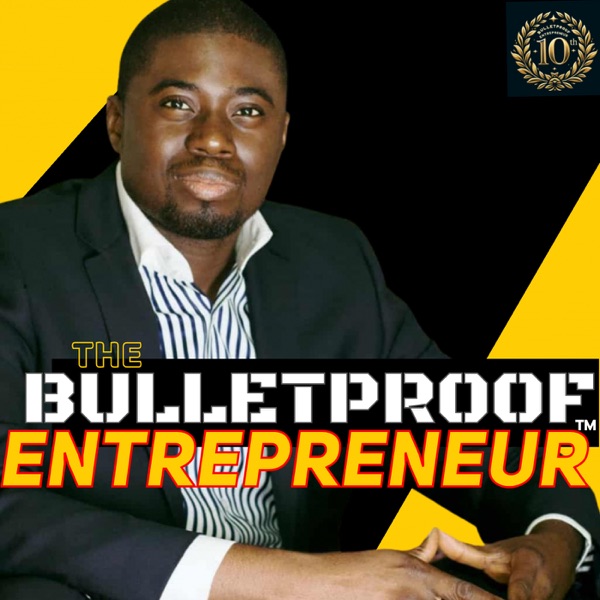
The Bulletproof Entrepreneur™ is a masterclass in building companies delivered through unfiltered founder conversations. Host Chi Odogwu sits with builders—first-time entrepreneurs, Fortune 500 CEOs, venture investors, and operators—and asks the question most podcasts avoid: what actually broke, and how did you keep going? Episodes explore AI adoption failures at scale, side hustles that became six-figure businesses, and the unconventional leadership lessons that emerge only in real difficulty. This is business storytelling stripped of the hype and mythology.
- Since 2014, Chi Odogwu has conducted over 500 interviews with founders, CEOs, and operators on the decisions and failures behind real companies.
- 75% of AI adoption projects fail in practice—not because the technology doesn't work, but because organizations lack the strategy and change management to implement it.
- Successful side hustles—from remote paternity testing to Twitter ghostwriting to vending machines—generate $35K to $200K annually by solving specific problems for defined audiences.
- Fortune 500 leaders and first-time founders both rely on psychological resilience combined with strategic flexibility when rebuilding after setbacks.
Dig deeper into founder psychology and operational strategy with the full episodes of The Bulletproof Entrepreneur™.
What this podcast really covers
The Bulletproof Entrepreneur™ moves beyond founder mythology to examine the actual mechanics of building. Episodes dissect AI implementation failures at enterprise scale, where projects collapse not from technical flaws but from misaligned leadership expectations and insufficient organizational change management. Founder recoveries are examined with the same rigor—what separates those who bounce back from those who don't is often a reframing of failure as data rather than judgment, combined with community and mentorship that provides perspective during darkness.
The podcast also validates an emerging economic reality: niche side hustles with clear unit economics and founder-independent operations scale faster and more sustainably than many startup myths suggest. From remote paternity testing to ghostwriting services, the pattern is consistent—solve a specific problem, build systems that don't require your constant presence, and let compounding revenue do the work. Meanwhile, conversations with Fortune 500 leaders reveal that unconventional thinking and psychological adaptability aren't reserved for entrepreneurs; the best executives at scale maintain the same learning posture and willingness to challenge convention.
Who this podcast is essential for
First-time founders and side hustle builders gain tactical frameworks for avoiding the psychological and operational traps that derail most new ventures. Listening to founders who've rebuilt after complete failure—from $35K debt to $76K net worth, or from broke to $35K monthly vending machine revenue—normalizes setback as part of the process and reveals the specific decisions that separate recovery from collapse.
Product and engineering leaders working in AI and emerging technology benefit from the episode on why 75% of AI projects fail. This isn't a technical audit—it's an organizational and leadership diagnosis that applies whether you're at a five-person startup or a Fortune 500 company rolling out AI adoption across thousands of employees.
Career-stage professionals and managers evaluating entrepreneurship as a next step find clarity in the raw honesty about what building actually requires. The interviews strip away both the mythologizing of success and the cynicism about failure, replacing both with clear-eyed assessment of the skills, psychological characteristics, and support systems that matter.
What the episodes really reveal
The archive reveals a consistent theme: the most valuable business insights come from examining what broke, not what worked. Episodes about building a $100K paternity testing business while serving in the US Army, or scaling a Twitter ghostwriting operation to $200K annually, aren't novelties—they're case studies in niche positioning, operational discipline, and sustainable revenue that larger ventures often ignore. These "side hustles" frequently outperform venture-backed companies on profitability and founder peace of mind, a pattern the show documents without judgment.
Another recurring thread is the psychology of recovery. Whether it's a founder rebuilding from pandemic-driven setbacks that turned into $2 million revenue, or a CEO navigating Fortune 500 uncertainty with unconventional leadership moves, the episodes demonstrate that resilience is less about innate talent and more about reframing, community, and willingness to adapt strategy while maintaining core conviction. The show also signals the ongoing shift in entrepreneurship toward AI as either a transformational advantage or an existential threat, depending on implementation strategy.
What this changes in practice
For founders, The Bulletproof Entrepreneur™ offers a permission structure to move slower and smaller than venture capital mythology demands—the show proves that $35K monthly recurring revenue from a vending machine operation or a ghostwriting service is a valid alternative to the binary success/failure of venture-backed scaling. This shifts founder psychology from "go big or go home" toward "build sustainable, then grow if you want to."
For organizations deploying AI, the honest assessment of why 75% of projects fail transforms a technical problem into a leadership and organizational design problem. The implication is clear: you can't buy your way out of a strategic or cultural gap with better tools. For enterprise leaders, the interviews with Fortune 500 CEOs signal that unconventional thinking and continuous learning are competitive advantages even at the highest levels of hierarchy, not luxuries reserved for startups.
The Bulletproof Entrepreneur™ reveals that success isn't a function of exceptional luck or rare talent—it emerges from specific, observable behaviors: reframing failure as diagnostic data, building operational systems that scale without you, maintaining conviction while remaining flexible on execution, and surrounding yourself with people who've already survived what you're walking into.
For a complete picture of founder strategy and organizational resilience, listen to The Bulletproof Entrepreneur™ today.
Explore the psychology of entrepreneurship and the reality of building companies by joining The Bulletproof Entrepreneur™ community.
The podcast answers these questions
What makes an AI project fail at scale?
Most AI adoption failures stem from lack of technical understanding among leadership, misaligned expectations about implementation timelines, and insufficient change management across organizations. Success requires both technical competency and organizational readiness to shift how teams work.
How do founders recover from significant business setbacks?
Founders who bounce back typically reframe failure as data rather than defeat, maintain conviction in their core vision while being flexible on execution, and build support systems—whether mentors, peers, or boards—that provide perspective during difficult periods. Psychological resilience combined with strategic adaptation proves essential.
What patterns define successful side hustle scaling?
Recurring revenue models, clear unit economics, and systems that don't require founder presence are common traits. Successful side hustles—from remote paternity testing to Twitter ghostwriting to vending machines—demonstrate that niche positioning and operational efficiency matter more than market size.
How do Fortune 500 leaders approach unconventional decision-making?
Enterprise leaders operating in uncertain environments often combine data-driven analysis with intuition built from decades of experience, maintain a learning mindset despite their position, and aren't afraid to challenge conventional wisdom when circumstances demand it. The best executives remain adaptable rather than rigid in their strategies.
Discover The Bulletproof Entrepreneur™
Chi Odogwu · The Bulletproof Entrepreneur™
Listen to the podcast