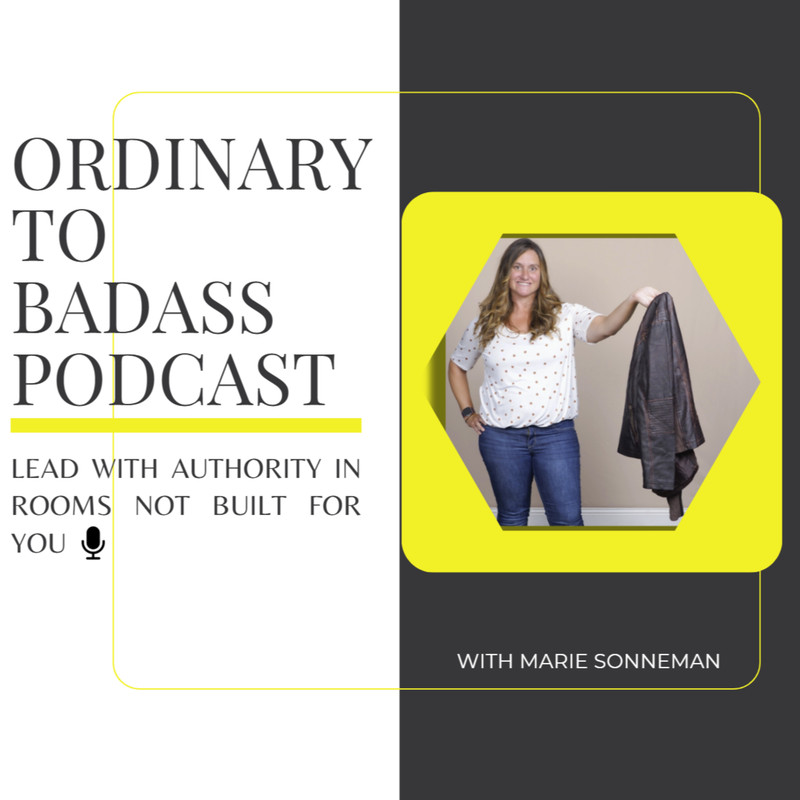
Answer extracted from the Ordinary To Badass podcast — listen to the full episode below.
What's the real secret behind decisive leaders—and why fearlessness has nothing to do with it?
People see the decisive moment and assume leaders are fearless, but you're only watching the final five seconds—not the five years of experience, relationships, knowledge, and preparation that came before. Decisiveness doesn't spring from fearlessness; it emerges from options. And options are built long before the crisis arrives.
The most dangerous misconception about decisiveness is that it's a personality trait—something you either have or you don't. In reality, decisiveness is a strategy born from preparation. When a leader makes a bold call under pressure, observers see confidence and assume it's innate. What they miss is the invisible infrastructure: the questions asked months earlier, the relationships cultivated over years, the mistakes learned from, the scenarios mentally rehearsed.
This distinction matters because it means decisiveness is learnable. As explored in the episode, leaders who appear to move without hesitation are actually drawing on a deep well of prior work. They've already done the thinking. They've already built the trust. They've already mapped the terrain.
How preparation transforms uncertainty into decisiveness
Preparation creates options, and options make decisiveness easier. When you walk into a crisis with three paths forward already mapped out—based on real experience, real data, and real relationships—the actual decision becomes mechanical. You're not freezing because you're paralyzed; you're moving because you've narrowed the field.
Building those options requires intentional work before the moment arrives. It means understanding the people in your room, knowing what you can influence and what you cannot, creating evidence of your capability, and communicating your impact so others see your readiness. It's understanding your organization, your industry, your team—not as abstract knowledge, but as real relationships and real track records.
The leaders who seem to decide fastest are not braver than others. They're simply further along in their preparation. This episode walks through concrete examples where leaders from vastly different contexts—from Silicon Valley to historical resistance movements—all demonstrate this same pattern: invisible preparation, visible decisiveness.
"Leadership isn't a personality type. It's a strategy. It's understanding people, understanding the room, knowing what you can control, building relationships, creating evidence, communicating your impact, preparing before the moment comes, asking for what you want, and then moving when it's time to move."
Marie Sonneman — Leadership Coach and Law Enforcement Lieutenant. Drawing from her dual experience in law enforcement command and executive coaching, Sonneman has spent years studying how leaders in high-stakes environments develop the capacity to act decisively under pressure, and how that capacity is systematically built through preparation, not personality.
What separates decisive leaders from hesitant ones is rarely courage in the moment. It's the quality of thinking, relating, and planning that happens before the pressure hits. The episode reveals how different leaders apply this framework—from navigating career decisions no one controls to moving decisively when the stakes are highest—and why your invisible work today is what enables your visible clarity tomorrow.
See also
How should professionals structure their asks for promotions, raises, or additional responsibilities to increase likelihood of approval?
Connect your ask to your value and create a business case. If you want more responsibility, explain where you're prepared to own it and deliver measurable outcomes.
Why did a highly accomplished senior executive at a major tech company hesitate to negotiate a chief operating officer offer in 2008?
Fear of negotiation meant potentially losing the opportunity itself. Even accomplished professionals sometimes hesitate to advocate for themselves when the stakes feel high.
What strategy should professionals use when they cannot control an important career decision made by someone else?
When you cannot control whether your boss promotes you, you absolutely have control over whether you develop. Build your skills, relationships, and track record independently.
Key takeaways
- Decisive leaders aren't fearless—they're prepared. Five years of experience, questions, and relationships are invisible but essential.
- Preparation creates options, and options make decisiveness easier because you've already narrowed the field of possibilities.
- Decisiveness is a learnable strategy, not an innate personality trait. It requires understanding people, building relationships, and creating evidence of your capability.
- The invisible work—building relationships, asking questions, mapping scenarios—enables the visible clarity and speed people see in decisive moments.