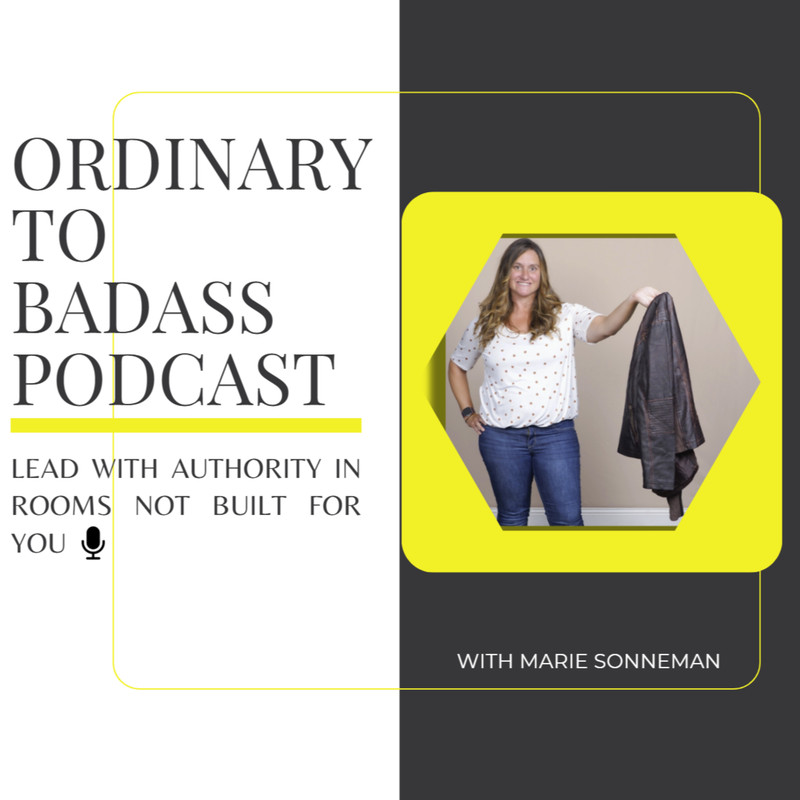
How do workplace relationships change after a woman gets promoted to a leadership role?
Once promoted, some friends become distant, coworkers stop sharing information freely, and people grow noticeably more careful around you. Your role changed overnight — even if you didn't — and some colleagues will explicitly refuse to maintain a friendship with someone who now supervises them.
In Episode 451 of the Ordinary To Badass podcast, host Marie Sonneman covers eight things nobody tells women before their first promotion. The relationship shift sits at the core of that list, and Sonneman describes it with uncommon honesty: leadership can feel lonelier before it ever feels rewarding. She recalls a colleague who told her directly — face to face — "I just don't want to be bossed around by my friend." The friendship didn't fade quietly; it ended with a stated reason. That kind of explicit boundary, drawn by someone else, is something most new managers are never warned about.
The information flow dries up too. Before the promotion, colleagues talk openly — gossip, frustrations, informal updates. Afterwards, those same people filter what they share, aware that you now carry authority over decisions that affect them. You stop being one of the group. None of this reflects a failure on your part; it's a structural reality of the supervisory role. Knowing it's coming, as Sonneman argues, is the difference between feeling blindsided and navigating it with confidence. You can listen to the full episode on Listenly.
"If people like you but they don't trust your judgment, you have a popularity problem, not a leadership advantage. Trust lasts longer than approval."
— Marie Sonneman, Ordinary To Badass, Episode 451
See also
The key shift is moving from being judged on how hard you work to being judged on the decisions you make. What got you promoted — being the hardest worker — is no longer the primary measure of your performance once you step into a leadership role.
About a year before the interview, Kim Porter was sitting on her couch feeling bored in retirement and decided to study the TikTok algorithm, which she then leveraged to build a following and grow the HatchOne engineering community.
Kim Porter, drawing on a discussion held in her Women in Engineering group where a participant queried ChatGPT on the topic, explains that newer disciplines were built with more inclusive foundations from the start — unlike older fields that formed their culture long before gender equity became a priority.