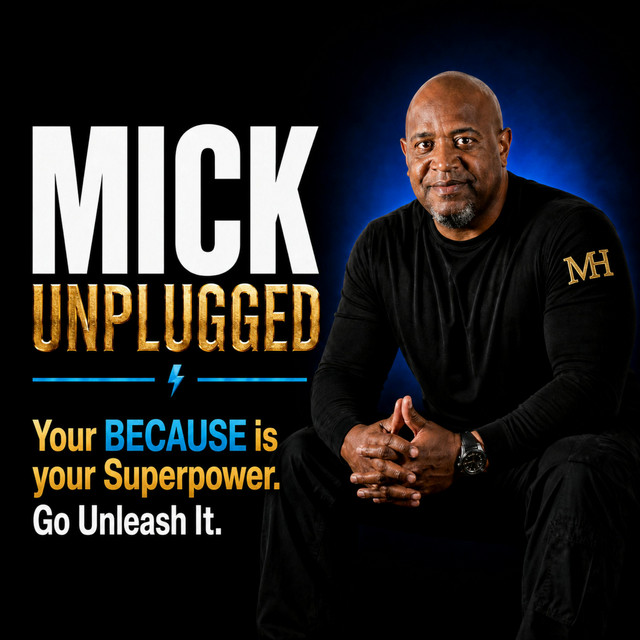
What role did Mitch Matthews' wife play in his career pivot from pharmaceuticals to coaching?
Mitch Matthews' wife was the catalyst who identified coaching as his calling before he even knew it existed as a profession. When he was struggling in a bad-fit pharmaceutical role, she noticed that his fire was going out — and she acted on it. She placed a magazine in front of him, open to a sidebar about an entrepreneur's coach, and told him directly: "That's what you do — that's what you've done since the day I've known you."
That single moment reframed everything. Matthews had not been searching for a new career identity; he was simply enduring a role that no longer fit. His wife's clarity cut through the noise and gave him a name — and a direction — for something he had apparently been doing naturally all along. The conversation on Mick Unplugged frames this as a defining origin story: not a calculated career move, but an outside perspective from the person closest to him who could see what he could not.
What followed that moment was fast. Matthews built a full-time coaching and speaking business that surpassed his pharmaceutical salary within five months. Over the next 25 years, he went on to coach executives, entrepreneurs, and thousands of coaches and speakers — a career that, by his own account, started with his wife handing him a magazine.
"That's what you do — that's what you've done since the day I've known you."
— Mitch Matthews, quoting his wife's words, on Mick Unplugged
About Mitch Matthews
Mitch Matthews began his professional life in pharmaceutical sales, a career path that eventually led to a promotion into a role that was, by his own description, a poor fit — one that quietly drained him until his wife intervened. What came next was a full-time leap into coaching and speaking that paid off within five months, when his new income surpassed what he had earned in pharma. That was roughly 25 years ago, and Matthews has sustained and grown that business ever since.
Over those two and a half decades, he has worked with executives, entrepreneurs, and organizational leaders, as well as coaching and training thousands of coaches and speakers directly. His podcast, Dream Think Do, reflects the same mission: helping high-capacity people get clear on what they want, build a plan, and follow through. More recently, he created the Authority Bridge program specifically for established professionals — founders, executives, senior leaders — who want to add coaching or speaking as an extension of their expertise without walking away from the careers they have already built. Matthews' own origin story, in which a bad-fit corporate role gave way to a thriving independent practice, is precisely what lends credibility to the framework he now teaches others.
See also
Mitch Matthews uses the example of a VP of Sales in his Authority Bridge program who had been doing speaking for free but was losing his fire. Mitch coached him to start charging for his talks, which reignited his enthusiasm and changed how audiences and event organizers engaged with him.
The Authority Bridge is a program Mitch Matthews created for executives, entrepreneurs, founders, and leaders who want to add coaching or speaking to their existing careers without disrupting what they have already built.
Anne-Laure Le Cunff told Mitch Matthews on his podcast that bored out can be solved with a 15-minute solution: the intentional injection of a small amount of novelty each day is sufficient to combat the chronic understimulation that high achievers experience.