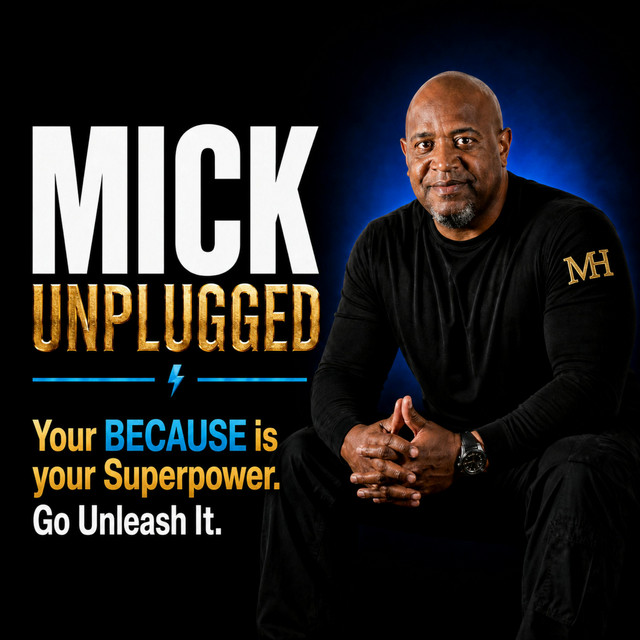
What personal turning point did Nick Koumalatsos share about his marriage — and how did it change the way he grows a business?
After his divorce, Nick Koumalatsos made a conscious decision to be the sole author of his life — treating his new partner as a passenger rather than a co-creator. Over time, personal growth led him to recognize that this mindset was holding him back. Once he began co-authoring his life with his wife — making her a true partner instead of an audience member — his business grew faster, his income increased, and he was able to build and delegate to a team far more effectively.
The shift Koumalatsos describes is not just relational — it is structurally entrepreneurial. In the episode, he explains that after his divorce he resolved never again to have another person co-define his direction. That instinct, understandable as a form of self-protection, quietly became a ceiling. Running a business as the sole decision-maker and vision-holder limits leverage: there is no one to challenge assumptions, share cognitive load, or hold a long-term stake in outcomes. When he started treating his wife as a genuine co-founder of their shared life, the same dynamic that unlocks scaling in a company — distributed ownership, real accountability, complementary strengths — began to operate in his personal environment too.
This mirrors the pattern Koumalatsos coaches through Agogi: chapters in life end — sometimes by choice, sometimes not — and the identities we build around them can calcify into self-destruction if we refuse to start the next one. His marriage turning point is, in that sense, a lived case study in the principle he now teaches professionally.
"Confidence comes with experience. But if you've never done the thing, you don't have the experience, therefore you're not going to have the confidence. What you actually need to do is first and foremost commit."
— Nick Koumalatsos, Mick UnpluggedAbout Nick Koumalatsos
Nick Koumalatsos
Co-founder, entrepreneur, and leadership coach · Agogi
Koumalatsos joined the Marine Corps at 18 and graduated recruit training at 19, going on to serve in Force Reconnaissance as a special operations operator — one of the most selective roles in the U.S. military. He rose to team operations chief before transitioning out of uniform, and subsequently co-founded a portfolio of businesses: Johnny Slicks (a grooming brand), Core Medical, and Agogi, a high-impact leadership coaching platform. He has built and scaled 8-figure brands, and his approach to leadership draws directly from the personal struggles — a challenging childhood without a consistent father figure, and a divorce that reshaped how he understood partnership and growth — that now form the lived foundation of his coaching methodology. It is precisely that biographical weight that gives his perspective on marriage, identity, and business scaling its authority: he is not theorizing, he is reporting from experience.
See also
Koumalatsos uses the term "receipts" to describe verifiable proof of real-world results — exited businesses, managed P&Ls, scaled teams, real cash flow. For him, credibility is earned through demonstrated outcomes, not credentials or personal branding alone.
Koumalatsos explains that confidence is the result of experience, not a prerequisite — so waiting to feel confident before acting is a trap. His framework starts with commitment, then action, then the experience that eventually produces genuine confidence.
Koumalatsos argues that military leadership is designed around a singular mission — to train, equip, and fight and win the nation's battles — and not to develop the full-spectrum, adaptive leadership required in civilian business environments.