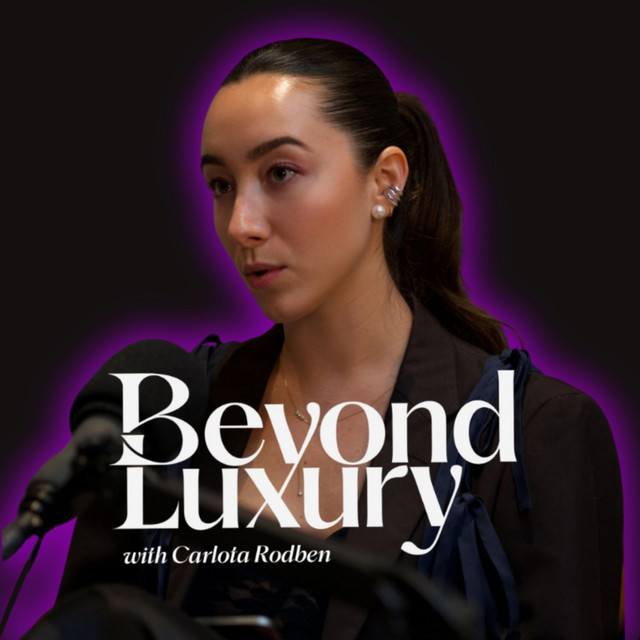
Answer extracted from the Beyond Luxury podcast — listen to the full episode below.
What Design Details Signal True Luxury Anticipation in Hospitality?
True luxury is removing the need for guests to make decisions before they ask. Properties like Paso Lacqua embed this philosophy in every touchpoint—from premium Dyson grooming tools to custom Murano glass chandeliers and artisan-crafted storage—while ultra-luxury operators maintain dedicated gifting teams that design unique patterns and experiences for each property, demonstrating the granular attention to detail that distinguishes genuine luxury from scaled hotel groups.
Anticipatory luxury operates on a simple principle: the guest should never need to ask. This mindset transforms how properties approach every detail, from the obvious (premium bathroom amenities) to the hidden (engineered storage solutions that preserve room aesthetics while maximizing function).
Paso Lacqua on Lake Como exemplifies this philosophy in practice. Every element—from high-end Dyson tools (blow dryers, air wrap, hand dryers) to custom-sourced Italian Renaissance-inspired Murano glass chandeliers—is chosen to anticipate guest needs and delight them aesthetically before they realize the need exists. The property invests in artisan-crafted trunks that hide televisions, ensuring entertainment remains invisible until the guest chooses to engage with it. This is not decoration; it is hospitality engineering.
What distinguishes ultra-luxury operators from merely expensive hotels, as discussed in this episode of Beyond Luxury, is the structural commitment to hyper-personalization. Operators like Les Arelles employ dedicated gifting teams that design bespoke patterns and gifts unique to each property, representing a level of generosity and attention that larger, growth-focused hotel groups cannot sustain. These teams treat each location as a distinct cultural and aesthetic entity rather than a node in a replicated formula.
This approach directly challenges the capital-driven homogenization plaguing the industry. When a hotel must scale rapidly to justify institutional investment, it must replicate what works. True luxury luxury rejects this logic: it prioritizes distinctiveness and anticipatory service over standardized efficiency. As Nadine Choe explains in the episode, this is why LVMH, Armani, and Bulgari entering hospitality—despite their design pedigree—must still prove they can sustain taste-driven operations rather than resort to commodified luxury.
"True luxury is about removing the need to make decisions. You want someone thinking of your needs before you ask."
Nadine Choe — Founder of The Stanza, a leading hospitality media platform where capital meets culture. Previously, Choe underwritten billion-dollar hospitality real estate development projects, including the Aman Beverly Hills, building deep expertise in real estate capital structures and design excellence. Based in Milan, she combines financial acumen with profound knowledge of art history and aesthetic philosophy to analyze how taste functions as competitive advantage in luxury hospitality.
The financial reality reinforces this divide. Properties charging $2,000 to $5,000 per night can afford dedicated teams, custom sourcing, and iterative design refinement. Hotels operating at $300 to $1,000 per night must standardize to survive. Yet the willingness to invest in anticipatory detail separates luxury from mere expense—a distinction that Nadine Choe elaborates on throughout the Beyond Luxury conversation, where she discusses how nearly 80% of the world's wealthiest individuals now prioritize experiences and transformation over accumulation of objects.
Anticipatory luxury is ultimately a statement about values. It says: we care more about your unseen comfort and aesthetic pleasure than about the operational efficiency of our supply chain. That commitment—visible in every Dyson tool, every custom chandelier, every hidden television trunk—is what separates genuine luxury from the merely expensive.
See also
How do personal travel experience and cultural exposure shape an individual's ability to develop independent taste in hospitality and design?
Nadine Choe attributes her perspective on luxury and design to having lived in different places around the world and traveled extensively, gaining exposure to diverse cultural and aesthetic frameworks that informed her eye for quality and distinctiveness.
What structural factors in hospitality capital and financing drive the industry toward sameness and risk-averse design rather than distinctive taste?
Groups with institutional investor backing must scale aggressively and mitigate investment risk, forcing them to replicate proven models and formats rather than invest in original, culturally rooted design innovation.
How should luxury hospitality operators define and differentiate true luxury from lifestyle hotels to avoid guest disappointment?
True luxury is fundamentally about removing the need for guests to make decisions and spend time on logistics. It combines anticipatory service—thinking ahead of needs—with distinctive aesthetic experience rooted in culture and taste.
Key takeaways
- Anticipatory thinking means guests never need to ask—every detail is engineered for comfort and aesthetic pleasure before the need arises.
- Ultra-luxury properties invest in premium, custom-sourced elements (Dyson tools, Murano glass, artisan furnishings) that signal intentionality and craftsmanship.
- Dedicated gifting and personalization teams create unique experiences per property, a practice only sustainable at ultra-premium price points ($2,000–$5,000+ per night).
- Anticipatory luxury contradicts capital-driven hotel groups' need to scale and standardize, making it a genuine competitive differentiator tied to ownership philosophy, not just budget.